
Most Canadian businesses treat promotional products as an afterthought, something ordered two weeks before a trade show or grabbed from a generic catalogue when a client gift is needed. That approach produces forgettable merchandise that sits in a drawer. The companies that get real returns from custom promotional products Canada-wide take a completely different approach: they treat branded merchandise as a media channel, one with measurable impressions, a defined audience, and a specific job to do. This guide shows you exactly how to make those decisions, from product category selection to decoration method to supplier vetting, with no filler and no vague advice.
Table of Contents
-
Decoration Methods Explained: Embroidery vs. Screen Print vs. Digital
-
Comparing Ordering Approaches: Local Specialist vs. Big-Box Promo vs. Direct Offshore
Quick Takeaways
|
Key Insight |
Explanation |
|---|---|
|
Utility determines shelf life |
Products recipients actually use generate repeated brand impressions daily. A cheap item that never leaves the bag costs more per impression than a quality item used every morning. |
|
Decoration method affects brand perception as much as the product itself |
Embroidery on a polo reads as premium. A low-resolution screen print on the same shirt reads as budget. The decoration choice shapes how recipients perceive your brand. |
|
Canadian climate creates product opportunities most suppliers overlook |
Insulated drinkware, fleece layers, and winter accessories have months of high-use time in most Canadian cities. They consistently outperform sunglasses or fans as year-round brand vehicles. |
|
Minimum order quantities are negotiable more often than buyers realize |
Many Canadian suppliers will accommodate smaller runs, especially for decorated apparel. Always ask before assuming you need to hit a high MOQ or pay full price per unit at low volume. |
|
Sustainable options are now a baseline expectation, not a premium differentiator |
A significant and growing share of promotional product sales come from sustainable products. Eco-conscious choices now reflect minimum brand standards for many Canadian corporate buyers. |
|
85% of consumers remember the brand that gave them a promotional item |
Brand recall from physical merchandise far outperforms most digital ad formats, making promotional products one of the most cost-efficient brand awareness tools available. |
|
Matching the product to the recipient's life, not just your brand, is the real skill |
A construction safety manager values a branded hard hat. A startup founder values a premium notebook. Getting this right separates merchandise that gets used from merchandise that gets recycled. |
Why Promotional Products Still Work in Canada
The skepticism about promotional products usually comes from people who have seen bad ones: the flimsy pen that breaks the first week, the tote bag with an illegible logo, the stress ball that ended up in a landfill. That skepticism is earned, but it is aimed at the wrong target. The problem is not promotional products. The problem is undisciplined buying.
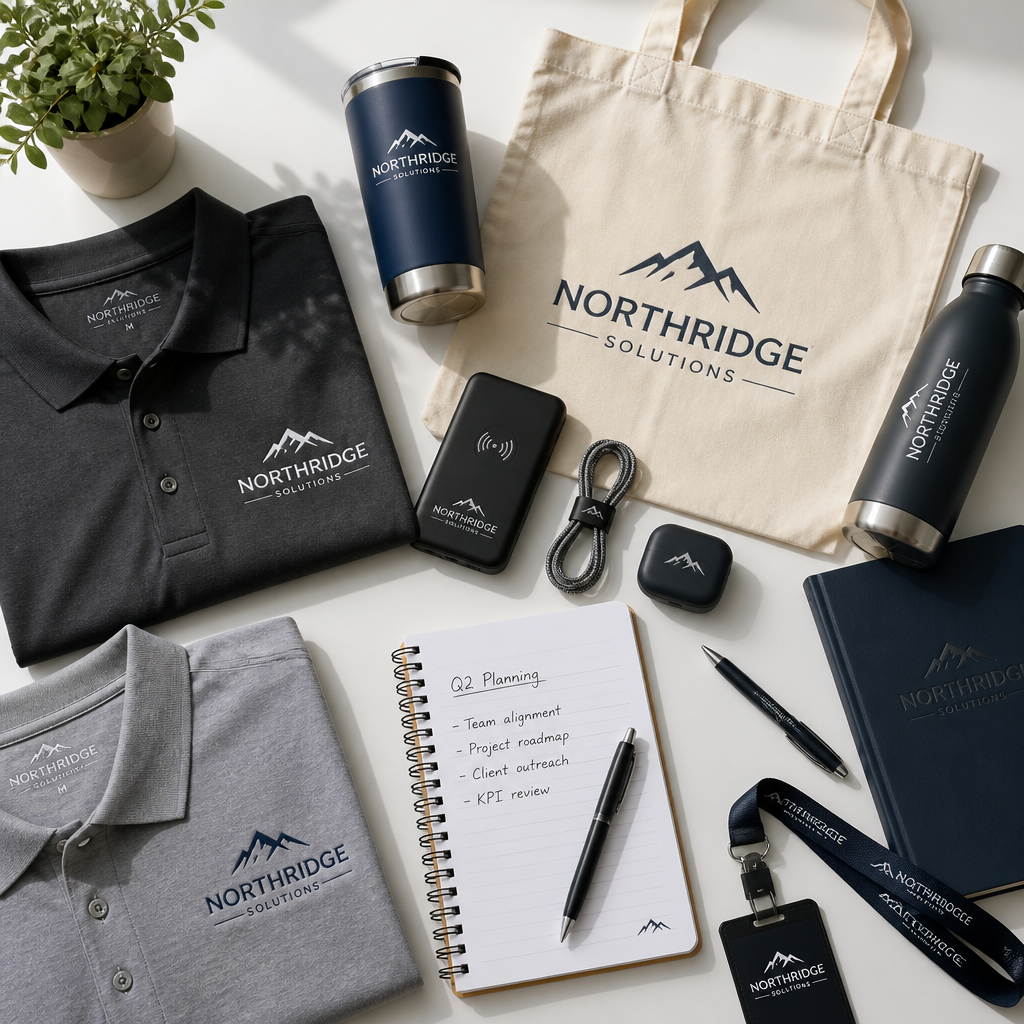
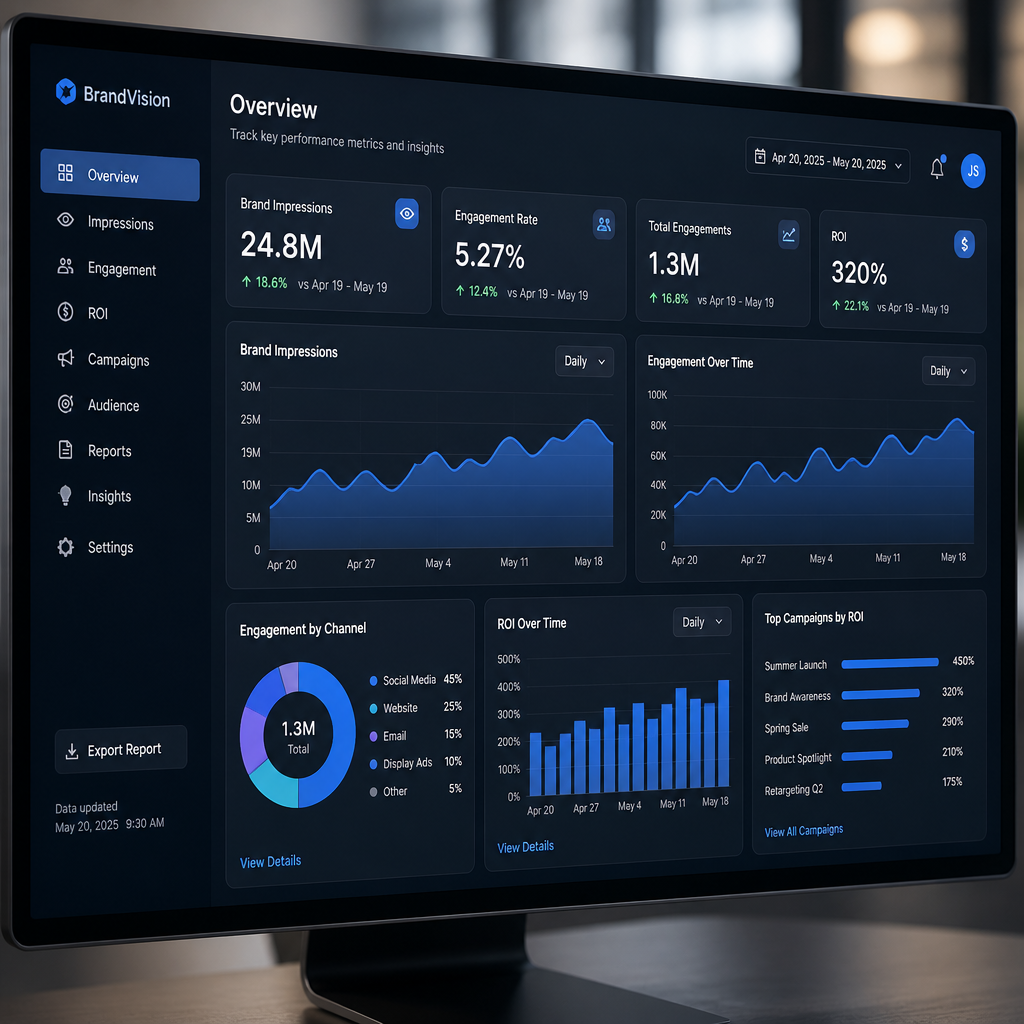
The data consistently shows that well-chosen branded merchandise outperforms most other marketing formats on brand recall. 85% of consumers remember the advertiser associated with a promotional item, and the majority can still recall the brand two years after receiving it. That kind of sticky awareness is almost impossible to buy with digital ads at equivalent cost. According to research from the Advertising Specialty Institute, a typical tote bag generates roughly 5,000 impressions over its useful life at a cost-per-impression well under a cent. No banner ad, no sponsored post, and no radio spot comes close to that ratio.
For Canadian businesses specifically, the physical nature of promotional products solves a real problem: standing out in a cluttered inbox and social feed. A well-made branded item sits on a desk, gets worn to the gym, or gets carried through an airport. It earns impressions in environments where your competitors cannot follow.
Matching Product Categories to Business Goals
The single most common mistake in buying branded merchandise Canada-wide is picking a product first and then trying to justify it. The right sequence is the opposite: define the goal, define the recipient, then select the product that serves both. Here is how that plays out across the main use cases.
Trade Show and Event Giveaways
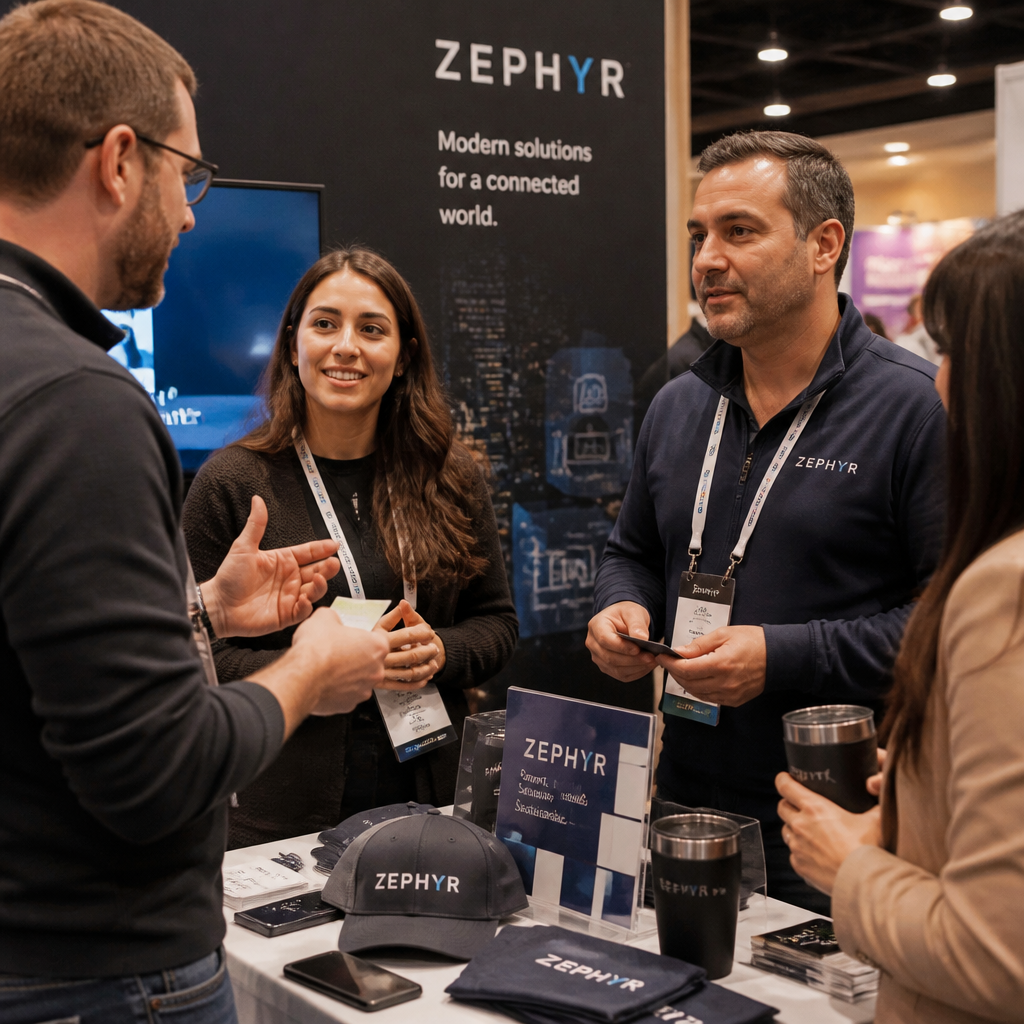
At a trade show, you are competing with every other booth for attention and for space in a tote bag that will be carried home. The priority here is mass volume at a price point that does not destroy your per-lead cost, combined with enough utility that the item survives past the recycling bin. Branded pens, custom notebooks, logo drinkware, and reusable bags have all proven to hold up in this context. Avoid novelty items with no real function: they get discarded at the hotel before the attendee boards the plane home.
Research from trade show contexts consistently finds that 83% of attendees remember the company that gave them a promotional product at an event, making giveaways one of the highest-recall touchpoints in the entire trade show experience. Pair a functional item with a clear, brief brand message and you have earned a marketing impression that outlasts the event itself.
Corporate Gifting and Client Retention
Client gifts operate on different economics than mass giveaways. Volume is lower, unit value should be higher, and the product should communicate that you know who the recipient is. Premium insulated tumblers, quality leather journals, branded outerwear, and custom gift sets all signal investment and attention. A generic gift with a slapped-on logo does not say "we value this relationship." It says "we ran out of ideas."
The stronger approach is to match the product to the recipient's professional context. A construction company client who spends time on job sites will use a branded safety workwear piece or a rugged insulated mug far more than a frosted glass award. That daily use is where the brand impression compounds.
Employee Uniforms and Team Apparel
Custom apparel and work uniforms serve a dual purpose: they build internal team identity and turn your employees into walking brand ambassadors in the field. For industries like construction, logistics, healthcare, and hospitality, the uniform is often the first and most frequent touchpoint a customer has with the brand. Getting it right, quality fabric, a clean logo application, consistent sizing, matters far more than it does for a trade show pen.
For safety-regulated industries, custom safety workwear also needs to meet specific standards. This is not a category where budget buying makes sense. A supplier who can source CSA-compliant high-visibility gear and apply your branding correctly is worth the relationship.
Pro tip: When ordering team apparel for the first time, order a size run sample set before committing to the full volume. Fit inconsistencies across brands are real, and nothing kills team morale faster than uniforms that do not fit properly.
Promotional Stationery and Printed Collateral
Branded stationery, business cards, letterhead, and presentation folders sit at the intersection of promotional products and print marketing. They are not glamorous, but they are used constantly in B2B contexts. A well-designed business card or a quality branded folder leaves a professional impression at every meeting. For Canadian corporate buyers, these items are often ordered alongside apparel and giveaways from the same supplier, which simplifies logistics and keeps brand standards consistent across all touchpoints.
Decoration Methods Explained: Embroidery vs. Screen Print vs. Digital
The decoration method is where many buyers make expensive mistakes. Choosing the wrong method for the product or the application can produce a result that looks cheap, fades quickly, or simply does not match your brand's colour standards. Here is what you actually need to know.
Embroidery
Embroidery is the gold standard for apparel that needs to communicate quality. Polo shirts, caps, fleece jackets, and corporate outerwear almost always look better embroidered than printed. The texture is tactile, the thread colours are durable, and the result reads as premium to anyone who sees it. The tradeoff is that embroidery does not handle fine detail or gradients well. If your logo has a gradient or very thin lines, it needs to be simplified for embroidery. A good supplier will provide a digitized preview before you approve the run.
Screen Printing
Screen printing is the workhorse of promotional apparel decoration. It produces vibrant, high-opacity colour on t-shirts, hoodies, and bags at a cost that scales well with volume. The limitation is that each colour in the design requires a separate screen, so highly complex logos with many colours become expensive. Screen printing works best on flat, smooth surfaces and is the standard choice for event t-shirts, staff shirts in casual environments, and branded bags.
Direct-to-Film (DTF) and Digital Printing
Direct-to-film and digital printing methods have changed the game for small runs and complex artwork. They allow full-colour photographic-quality prints without the per-colour cost structure of screen printing. For businesses that need a small quantity, want a complex multi-colour logo applied accurately, or are producing a one-time event item, DTF is increasingly the right answer. The finish is different from screen printing, slightly softer and with less texture, so it is worth requesting a sample if you have not seen it before.
Pro tip: Always provide your logo in vector format (AI, EPS, or PDF) when placing a decorated apparel order. A supplier working from a low-resolution JPEG will produce a blurry result regardless of which decoration method they use. If you only have a raster file, ask if they offer vectorization before the order starts.
Budgeting for Branded Merchandise Without Wasting Money
The biggest budget mistake is treating unit price as the only cost. A $2 pen from an offshore catalogue has a setup fee, a shipping fee, a brokerage fee, and often a production time that requires expedited freight. By the time it arrives at your door, the "cheap" pen may cost more per unit than a $3.50 pen sourced domestically with transparent all-in pricing.
The True Cost Calculation
When evaluating any promotional product order, calculate the total landed cost: unit price plus setup fees, plus applicable duties and brokerage on imported goods, plus shipping to your location. Divide that by the number of usable impressions the item will generate. A quality item that gets used every day for two years generates far more impressions per dollar than a cheap item that gets thrown away after a week.
Good benchmarks suggest that well-tracked promotional product campaigns can generate very strong returns when quality meets audience expectations. The items that produce poor ROI are almost always ones that were chosen for low unit cost rather than for recipient relevance or durability.
Allocating Budget Across Product Tiers
A practical approach for corporate buyers is to think in three tiers. Mass giveaways (trade shows, open events) get a lower per-unit budget because volume is high and recipients are unqualified. Client gifts and appreciation items get a higher budget because the relationship has real dollar value. Employee and team items get whatever budget is needed to produce something the team will actually wear and use, because the brand impression they make in the field is directly tied to how the gear looks and performs.
The promotional products that get used every day are the ones that were chosen for the recipient, not for the buyer's convenience. Utility is the only reliable predictor of repeated brand exposure.
Comparing Ordering Approaches: Local Specialist vs. Big-Box Promo vs. Direct Offshore
Canadian buyers have three main options when sourcing logo branded products: a specialized Canadian promotional products company, a large national online catalogue supplier, or direct-from-source offshore ordering. Each has genuine strengths and real weaknesses. Here is an honest comparison.
|
Ordering Approach |
Best For |
Key Tradeoffs |
|---|---|---|
|
Local/Regional Canadian Specialist (e.g., A2Z Branding, Mississauga) |
Full-service orders combining apparel, giveaways, stationery, and trade show displays. Businesses that value consistent brand standards across all product types. Buyers who want personalized recommendations and real accountability. |
Higher per-unit cost than offshore direct; smaller product catalogue than major online platforms. Returns the value in service, brand consistency, and turnaround reliability. |
|
Large National Catalogue Supplier (e.g., 4imprint.ca, Entripy) |
High-volume single-product orders where price per unit is the priority. Buyers who have done this before and know exactly what they want. |
Limited personalization support. Online ordering can leave brand inconsistencies unaddressed. Difficult to get expert guidance on decoration method, product fit, or logo preparation. |
|
Direct Offshore Ordering |
Very high volume commodity items where absolute lowest unit cost matters and lead time is long enough to absorb overseas shipping plus customs. |
No Canadian quality oversight. Import duties, brokerage fees, and unpredictable lead times erode cost savings. Quality issues discovered after delivery cannot be practically remedied. Brand risk is real. |
For most Canadian corporate buyers, the specialist model produces the best total outcome. The savings from going offshore rarely survive the full landed-cost calculation, and the risk of a quality miss on a large run is significant. Where a catalogue supplier makes sense is for standardized, repeat orders where you have already proven the product and have artwork ready to go.
Canadian-Specific Considerations Every Buyer Should Know
Canada is not just a geography. It is a regulatory environment, a climate zone, and a cultural context that affects which products work, how they need to be decorated, and how they are received by Canadian recipients. Generic promotional product advice written for a US audience misses most of this.
Climate and Seasonality
Products that work year-round in Florida or California often have a compressed useful season in Canada. Sunglasses, fans, and light cotton tees serve a three-to-four-month window in most of the country. Insulated drinkware, fleece jackets, toques, and waterproof bags are used for eight or more months in most Canadian cities. If you want sustained brand exposure, buy for the climate your recipients actually live in.
Bilingual Requirements in Quebec
If you are distributing promotional products in Quebec, any text on the product, packaging, or accompanying materials must comply with French language requirements. This means either using a bilingual design from the start or creating a Quebec-specific version. Overlooking this creates regulatory exposure and, more practically, signals to Quebec recipients that your brand does not take their market seriously. A supplier with Canadian experience will flag this before it becomes a problem.
Import Duties and Cross-Border Logistics
Many promotional products, even those sold by Canadian suppliers, are manufactured overseas. A knowledgeable Canadian supplier handles the import classification, duty payment, and customs brokerage on your behalf, so the cost is built into your quote. When you order direct from an offshore platform, those costs arrive separately and unexpectedly. Always confirm with your supplier whether the price you are quoted is fully landed or whether duties and brokerage are additional.
Canadian Safety Standards for Workwear
If your branded merchandise program includes safety workwear, the standards matter. High-visibility gear, hard hats, and safety footwear used in Canadian workplaces need to meet CSA (Canadian Standards Association) specifications. A supplier that does not ask about your industry's safety requirements when you order custom hard hats or high-vis vests is a supplier to be cautious about. At A2Z Branding, workwear orders are treated as both a branding and a compliance exercise, because they have to be.
Pro tip: If you are ordering branded workwear for a regulated industry, ask your supplier to confirm which CSA standard each garment meets before the artwork is applied. Changing the product after decoration is not an option.
Vetting Your Promotional Products Supplier
The promotional products industry has a wide variance in supplier quality, and the difference between a good supplier and a bad one rarely shows up in the initial quote. It shows up when there is a problem: a missed deadline before a trade show, a logo application that does not match your brand colour, an order that arrives three weeks late with no proactive communication. Here is what to look for before you commit to a supplier relationship.
Experience with Your Product Category
A supplier who does great work on t-shirts may not have the equipment or expertise to produce quality embroidered outerwear. Ask specifically about their experience with the product and decoration type you need. A reputable supplier will show you samples, walk you through their process, and be direct about what they can and cannot do well. Vague reassurances without samples are a warning sign.
Transparent Artwork Proofing Process
Any supplier worth working with will provide a pre-production proof, an actual mockup of how your logo will look on the specific product, in the specific decoration method, before the order goes into production. Do not approve an order without one. The proof is where you catch colour mismatches, sizing issues, and placement errors before they are multiplied across hundreds of units.
Clear Policies on Turnaround and Rush Orders
Canadian businesses frequently need promotional products quickly, particularly for trade shows, product launches, and corporate events with fixed dates. Ask about standard production lead times, rush order availability, and shipping options before you place an order, not after. A supplier that has been operating in Canada for decades, like A2Z Branding with over 25 years in the market, understands the logistics of getting orders across a geographically large country on time.
Personalized Recommendations vs. Catalogue Browsing
One of the clearest differentiators between a specialist supplier and a catalogue platform is whether you get a human being who asks about your use case, your audience, your budget, and your brand before suggesting products. That conversation saves money and prevents bad purchases. If you contact a supplier and the first response is a link to a product catalogue with no questions asked, you are working with a fulfilment operation, not a branding partner.
Frequently Asked Questions
What is the minimum order quantity for custom promotional products in Canada?
Minimum order quantities vary significantly by product type and supplier. For decorated apparel like embroidered polos or screen-printed t-shirts, many Canadian suppliers can accommodate runs as low as 12 to 24 pieces. For hard goods like custom pens or branded drinkware, minimums are often higher, typically 50 to 100 units. Always ask your supplier about their minimums upfront, and ask whether a lower quantity is possible at an adjusted per-unit price before assuming you cannot proceed with a smaller run.
How long does it take to receive custom promotional products in Canada?
Standard production and delivery timelines for most custom promotional products range from two to three weeks after artwork approval. Rush production is available from most reputable Canadian suppliers for tighter deadlines, typically at an additional cost. If you are ordering for a specific event, work backward from the event date and build in at least one week of buffer for any artwork revision rounds. Ordering three to four weeks in advance is the practical minimum for most decorated apparel orders.
What file format should I provide for my logo?
Always provide your logo in a vector format, specifically an AI, EPS, or PDF file created in a vector editing program. Vector files scale to any size without losing quality and give the decorator the clean, accurate artwork they need for embroidery digitizing or screen printing. If you only have a JPEG or PNG, ask your supplier whether they offer logo vectorization as part of their setup process. Many do, though it may carry a one-time fee.
Are eco-friendly promotional products actually better quality, or just more expensive?
Eco-friendly promotional products have improved substantially in quality and are no longer automatically a compromise. Organic cotton apparel, recycled-material bags, bamboo drinkware, and recycled plastic items are available at quality levels that match or exceed their conventional equivalents. The unit cost is sometimes higher, but not always, particularly as production volumes in sustainable materials have scaled up. More importantly, sustainable products signal brand values that resonate with a large and growing share of Canadian consumers and corporate recipients.
How do I ensure my brand colours are accurately reproduced on promotional products?
The most reliable approach is to provide your Pantone Colour Matching System (PMS) colour codes to your supplier before production. PMS codes give the decorator an industry-standard reference for your exact brand colours. For embroidery, the decorator matches thread to the closest available PMS equivalent. For screen printing and digital methods, PMS codes guide colour calibration. Always request a pre-production proof and compare it to your brand colour standards before approving the full run.
Can I order a mix of different products in one order from a Canadian supplier?
Yes, and for most corporate buyers this is the most efficient approach. A full-service Canadian promotional products supplier like A2Z Branding can handle a single order that includes custom apparel, branded giveaways, printed stationery, and trade show displays, all with consistent logo application and brand standards. This approach reduces the administrative overhead of managing multiple vendor relationships and ensures that your brand looks consistent across every product type.
What types of branded merchandise generate the most brand recall?
Research consistently shows that useful, high-frequency items generate the strongest brand recall because they earn repeated daily impressions. Drinkware, bags, outerwear, and desk accessories perform well across most demographic groups because they are used regularly and visibly. The product that generates the most recall for your specific audience is the one they actually use in their professional and personal lives. This is why understanding your recipient matters more than chasing the most popular product trend of the moment.
What has been your experience ordering custom promotional products for your Canadian business? Share what worked, what did not, and any supplier lessons learned, your feedback helps other corporate buyers make better decisions.